The Department of Game, Fish and Parks have recently been in our area (December 2014) discussing the die-off of the Bighorn Sheep in our area. The Rapid City herd has been reduced from 270 to less than 100 bighorn sheep. This was due to an outbreak of pneumonia in the Rapid City herd. The herd is still suffering from the effects of the outbreak through reduced reproduction and low lamb survival. As the mature sheep continue to age and die, they are not being replaced with new lambs.
Without help from the general public, landowners in bighorn sheep use areas and the SDGFP, the Rapid City sheep herd will likely dwindle to very low numbers or disappear altogether.
Already in our Spring Canyon area, there are no male bighorn sheep left. There is a herd of a little less than 30 female sheep with a few lambs.
What can you do to help?
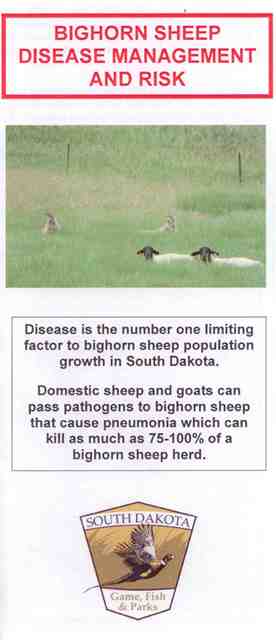
Domestic sheep and goats that occur in or around bighorn sheep habitat introduce pneumonia to wild sheep. Inadvertent risks to bighorn sheep frequently occur from smaller domestic sheep or goat operations, hobby herds, and farm flocks on small-acreage lands. Bighorn sheep are a highly social animal, and attraction to domestic sheep and goats commonly occurs, especially during estrus periods.
The most important tool that wildlife managers have is prevention of contact between bighorn sheep and domestic sheep and goats. This prevention measure is based on strong scientific evidence that when bighorn sheep and domestic sheep and goats come into direct contact, pneumonia outbreaks frequently occur in bighorn sheep.
<taken from the Bighorn Sheep Disease Management and Risk brochure from Game Fish & Parks>
For more information, visit the following sites:
 springcanyonwc